Syrenis named a Niche Player in the 2026 Gartner® Magic Quadrant™ for Privacy UX. Read the report

UK GDPR explained: what it is, who it covers and what changed in 2026

The UK GDPR is the United Kingdom’s main data protection law. It’s the EU GDPR as it was kept in UK law when the Brexit transition period ended in 2020, and it works alongside the Data Protection Act 2018 to govern how organizations collect and use personal data about people in the UK.

It isn’t a frozen copy anymore. The Data (Use and Access) Act 2025 rewrote parts of it. Most of those changes have applied since February 5, 2026, including a new lawful basis, looser rules on automated decisions and new cookie exceptions. A duty to handle complaints followed in June, and the regulator was restructured in September. If your UK and EU programs still run on identical rules, one of them is now out of date.

What is the UK GDPR?

When the transition period ended, the UK kept the GDPR’s text as domestic law and adapted it to work outside the EU. The ICO’s summary at the time was that “the key principles, rights and obligations remain the same”. The early differences were practical: transfers between the UK and the EEA needed a new legal footing, and the UK could now change its own law. It has.

UK GDPR and the Data Protection Act 2018

The two are read together, and you need both. The UK GDPR sets the core rules. The Data Protection Act 2018 fills in the detail: exemptions, the regulator’s powers, the fine amounts, and separate regimes for law enforcement and the intelligence services. A third law, the Privacy and Electronic Communications Regulations (PECR), covers cookies and electronic marketing, and where it applies it takes precedence over the other two.

Law What it does
UK GDPR The core rules: principles, lawful bases, individual rights, accountability, international transfers
Data Protection Act 2018 Supplements the UK GDPR, sets exemptions and fine amounts, gives the regulator its powers, and covers law enforcement and intelligence processing
PECR Cookies and similar technologies, plus email, text and phone marketing
Data (Use and Access) Act 2025 Amends all three. Royal Assent was June 19, 2025, with changes phased in since

Who enforces it

The Information Commissioner’s Office enforced the UK GDPR until September 30, 2026. On that date the single Information Commissioner was replaced by the Information Commission, a corporate body run by a board, under the Data (Use and Access) Act. It’s still known as the ICO, and existing guidance and enforcement carry on.
Who the UK GDPR applies to

It applies to controllers, which decide why and how personal data is used, and to processors, which handle it on a controller’s behalf. Processors carry their own obligations and can be liable for breaches.

It covers any organization processing personal data in the UK. It also reaches organizations based elsewhere that offer goods or services to people in the UK or monitor their behavior. For a US company, that usually means selling to UK customers, running a UK-facing website or tracking UK visitors for analytics or advertising.

If that’s you and you have no UK establishment, you’ll normally need a UK representative, appointed in writing and named in your privacy notice. The ICO exempts public authorities and processing that’s occasional, low risk and doesn’t involve large-scale special category or criminal offence data. The same logic runs the other way: a UK company with no EU establishment that targets EU customers needs an EU representative.

Most organizations that process personal data in the UK also pay the ICO a data protection fee, unless they’re exempt.

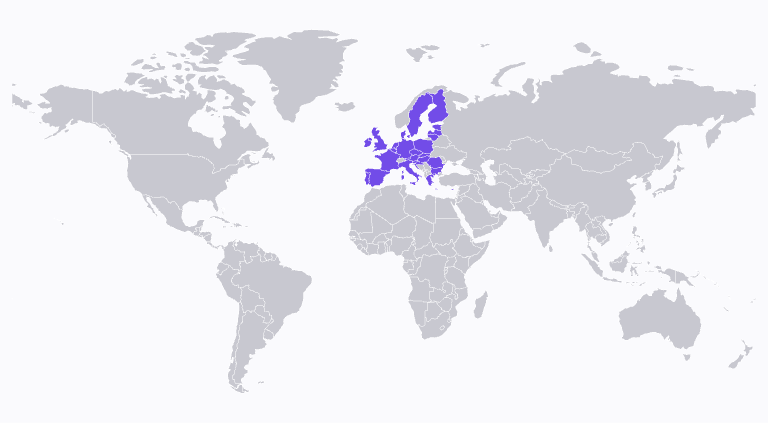
UK GDPR vs EU GDPR

They started identical. They aren’t anymore, and the gap widened in 2026.

UK GDPR EU GDPR
Regulator The ICO (the Information Commission since September 30, 2026) A data protection authority in each member state, coordinated through the EDPB
Maximum fine £17.5 million or 4% of worldwide annual turnover, whichever is higher €20 million or 4% of worldwide annual turnover, whichever is higher
Lawful bases Seven, including recognized legitimate interests Six
Automated decisions Allowed on any lawful basis except recognized legitimate interests, with safeguards. Tighter limits when special category data is involved Solely automated decisions with legal or similarly significant effects are restricted to set exceptions
Cookies PECR, with five exceptions to consent, including some analytics The ePrivacy Directive, with two exemptions
Children’s consent online Age 13 Age 16, unless a member state sets a lower age, down to 13
Complaints People can complain to you first, and you must handle it, from June 19, 2026 People complain to the supervisory authority
International transfers A “data protection test”: protection abroad mustn’t be materially lower than in the UK Adequacy decisions and safeguards under the EU regime

One thing hasn’t changed: data still flows freely from the EU to the UK. The European Commission renewed its UK adequacy decisions on December 19, 2025, and they run until December 27, 2031, with a review after four years.

What the Data (Use and Access) Act 2025 changed

Most of the Act’s data protection changes came into force on February 5, 2026, under the Commencement No. 6 Regulations. The complaints duty followed on June 19, 2026, and the new regulator on September 30, 2026.

Change What it means In force
Recognized legitimate interests A seventh lawful basis for five pre-approved purposes in Annex 1: responding to public task requests, national security and defense, emergencies, crime, and safeguarding. No balancing test, but the processing still has to be necessary February 5, 2026
Automated decision-making Articles 22A to 22D replace the old Article 22. Significant decisions with no meaningful human involvement are allowed with safeguards: tell people, let them make representations, offer human intervention and let them contest the decision February 5, 2026
Subject access Searches have to be reasonable and proportionate, not exhaustive, and the clock starts once you have any ID or fee you’ve reasonably asked for February 5, 2026
Purpose limitation and research Clearer rules on when a new purpose is compatible with the original one, and on consent for scientific research February 5, 2026
Children Online services likely to be accessed by children must take account of “children’s higher protection matters” when designing how they process data February 5, 2026
International transfers The new data protection test replaces the old adequacy standard February 5, 2026
Cookies and PECR Three new exceptions to consent and PECR fines raised to UK GDPR levels February 5, 2026
Complaints Controllers must make it easy to complain, acknowledge within 30 days and respond June 19, 2026
The regulator The Information Commission replaces the Information Commissioner September 30, 2026

For the full detail, see our guide to the Data (Use and Access) Act.

The new duty to handle complaints

Since June 19, 2026, anyone who thinks you’ve mishandled their data can complain to you directly, and section 164A of the Data Protection Act 2018 sets out what you owe them. You have to make complaining easy, for example with a form people can fill in online. You have to acknowledge each complaint within 30 days, respond without undue delay, keep the person updated and tell them the outcome. Your privacy notice should say they can complain to you.

It’s a small change on paper and a real one in practice. A complaint about a missed unsubscribe or an ignored cookie choice now has a statutory clock, so you need to find the record of what that person agreed to, quickly.

What changed for cookies

PECR now has three new exceptions to the consent rule: analytics used solely to improve your service, storage used solely to remember how someone wants your website to look or work, and locating a device so emergency help can reach the user. Each comes with conditions, and the word “solely” does a lot of work. For advertising, the ICO says you still need consent.

The penalty risk moved too. Cookie breaches can now draw fines of up to £17.5 million or 4% of worldwide turnover, the same as the UK GDPR’s top tier. More in our guide to UK cookie law.

What the UK GDPR requires

Seven principles

Everything else hangs off Article 5:

  1. Lawfulness, fairness and transparency
  2. Purpose limitation
  3. Data minimization
  4. Accuracy
  5. Storage limitation
  6. Integrity and confidentiality (security)
  7. Accountability

The last one is the one regulators test. It isn’t enough to comply; you have to be able to show it. Our guide to the UK GDPR principles takes each one in turn.

UK GDPR fines and enforcement

The Data Protection Act 2018 sets two tiers. The higher maximum, for breaches such as the principles, lawful basis and individual rights, is £17.5 million or 4% of total worldwide annual turnover, whichever is higher. The standard maximum is £8.7 million or 2%.

Big fines do happen. In October 2025, the ICO fined Capita £14 million over a 2023 cyber attack that exposed the data of 6.6 million people. The provisional figure was £45 million. The regulator has also gained new tools: it can now require people to attend interviews and require a report from an approved person.

Moving data between the UK, the EU and the US

EU to the UK

Covered by the EU’s adequacy decisions until December 27, 2031. No extra paperwork needed.

UK to the US

The UK-US data bridge has applied since October 12, 2023. You can send data to US organizations certified to the Data Privacy Framework that have also signed up to its UK Extension. Check the Data Privacy Framework List first, and label sensitive data as sensitive.

UK to anywhere else, or to a US recipient that isn’t certified

Use a safeguard such as the International Data Transfer Agreement or the UK Addendum to the EU’s standard contractual clauses. Under the new data protection test, you need to be reasonably satisfied that protection won’t be materially lower than in the UK.

A UK GDPR compliance checklist for 2026

01

Map your processing

Know what personal data you hold, where it lives, why you use it and who you share it with.

02

Recheck your lawful bases

Confirm a basis for each purpose, and whether any processing now fits a recognized legitimate interest.

03

Update your privacy notice

Add the right to complain to you, and explain any automated decision-making.

04

Run a complaints process

An easy way to complain, acknowledgment within 30 days, a response and a record of each step.

05

Review your UK cookie banner

Decide whether any analytics or preference cookies now qualify for an exception, and keep consent for everything else, including advertising.

06

Test your access request process

Make sure you can search every system, reasonably and proportionately, within a month.

07

Check your transfers

Confirm data bridge certifications, and review safeguards against the new data protection test.

08

Appoint representatives

A UK representative if you’re outside the UK, and an EU representative if you’re a UK company targeting EU customers.

09

Rehearse a breach

You have 72 hours, and the clock starts when you become aware.

How Syrenis helps with UK GDPR

UK GDPR is home ground for us: Syrenis has its European office in Warrington. The platform covers the parts of the UK GDPR that depend on operational data rather than policy documents:

  • Consent and cookies. Cookie consent management that applies different rules by jurisdiction, so your UK banner can use the new exceptions while your EU banner doesn’t, and every choice is recorded against the notice the person saw.
  • Preferences. A preference center that keeps choices in sync across your systems, so an opt-out is honored everywhere.
  • Rights and complaints. A privacy rights portal and data subject rights workflows that track each request against its deadline and keep the audit trail.
  • Notices and records. A privacy notice manager with version tracking, and a risk portal for processing records and risk assessments.

It connects to your existing systems through 350+ integrations.

For other laws, see consent management by regulation, including our EU GDPR page. Or book a demo to see how it handles UK and EU rules side by side.

Frequently asked questions

Is UK GDPR the same as GDPR?

No, though they share most of their text. The UK GDPR is the version kept in UK law after Brexit, and it’s been amended since, most significantly by the Data (Use and Access) Act 2025. The two now differ on lawful bases, automated decisions, cookies, complaints, international transfers and the maximum fine.

Does GDPR still apply in the UK after Brexit?

The EU GDPR doesn’t apply to UK processing anymore. The UK GDPR does, with the Data Protection Act 2018. A UK company that offers goods or services to people in the EU, or monitors their behavior, still has to comply with the EU GDPR for that processing.

What’s the difference between the Data Protection Act 2018 and UK GDPR?

The UK GDPR sets the core rules: principles, lawful bases, rights and obligations. The Data Protection Act 2018 supplements it with exemptions, the regulator’s powers and the fine amounts, and it covers law enforcement and intelligence processing separately. You comply with both together.

Does UK GDPR apply to US companies?

Yes, if they offer goods or services to people in the UK or monitor their behavior, for example by tracking UK website visitors. A US company with no UK establishment will usually also need to appoint a UK representative.

What are the seven principles of UK GDPR?

Lawfulness, fairness and transparency; purpose limitation; data minimization; accuracy; storage limitation; integrity and confidentiality; and accountability. They’re set out in Article 5.

What is the maximum fine under UK GDPR?

£17.5 million or 4% of total worldwide annual turnover, whichever is higher. A lower tier of £8.7 million or 2% applies to some breaches. Since February 5, 2026, breaches of the cookie rules can reach the higher tier too.

What changed in UK GDPR in 2026?

Most of the Data (Use and Access) Act 2025’s changes came into force on February 5, 2026: a new lawful basis for recognized legitimate interests, new rules on automated decisions, new cookie exceptions, higher PECR fines and a new test for international transfers. A duty to handle complaints followed on June 19, and the ICO became the Information Commission on September 30.

Who enforces UK GDPR?

The Information Commission, which replaced the Information Commissioner on September 30, 2026. It’s still known as the ICO.

Fact sources

Checked on October 21, 2026.

The law

The regulator

Government and the EU

Syrenis