Syrenis named a Niche Player in the 2026 Gartner® Magic Quadrant™ for Privacy UX. Read the report

Syrenis vs Usercentrics

Usercentrics alternative for enterprise consent and preference management

Syrenis is the Usercentrics alternative for organizations that have outgrown the cookie banner and need consent and preferences tied to real customers across every system they run. Usercentrics and its Cookiebot brand are built to get compliant consent onto websites, apps and connected TV quickly, while Syrenis is built for what happens after the click: identity-linked records that update across 350+ integrations in real time.

Other Usercentrics alternatives teams compare include OneTrust, Didomi, TrustArc, Osano and Ketch. The right one depends on whether you’re replacing a banner, a privacy suite or the preference layer your CRM relies on.

Usercentrics alternative

350+ Integrations

View all
Comparison

Syrenis vs Usercentrics, side by side

Usercentrics sells two consent platforms under one roof: Usercentrics CMP and Cookiebot. This comparison covers both.

Built for +

Regulated, multi-brand enterprises where consent and preferences feed CRM, service and marketing systems

Usercentrics describes its web CMP as designed for SMBs and growing businesses, with Corporate and Advanced options for high-traffic and multi-brand sites. Cookiebot is the self-serve option for smaller sites

Starting point +

A consent and preference record tied to a known person

Cookie and tracker consent on websites, apps and connected TV

Preference management +

Unlimited channels and preference types, multi-brand preference centers, a customer service portal, email action links and progressive profiling

Preference Manager: a preference center portal and widgets, a unified view of choices, data export and pre-built connectors to ad and martech tools

Identity +

Consent linked to verified identities and carried across devices, domains and channels

Cross-domain consent sharing (dependent on browser support) and cross-device consent sharing for connected TV

Integrations +

350+ integrations, API-first, with changes pushed to CRM, CDP, marketing, data and service systems as they happen

Pre-built connectors and two-way integration for ad platforms and martech, plus Google, Microsoft and Amazon consent signals

Frameworks +

IAB TCF 2.3, Google Consent Mode v2 and Global Privacy Control

IAB TCF 2.3, Google Consent Mode, Microsoft UET Consent Mode, Amazon Consent Signal and Global Privacy Control

Beyond consent +

Data subject request workflows, privacy notice management, a risk portal and a virtual DPO

A privacy policy generator, server-side tracking (including Meta Signals Gateway) and MCP Manager for governing AI access to data

Pricing +

Bespoke quote, based on the number of consent records, the products you need (such as cookie consent and preference management) and the number of domains

Published plans. Usercentrics web CMP is priced by domains and sessions, with a free plan under 1,000 monthly sessions. Cookiebot starts at €7 a month and scales by subpages

Best fit +

Organizations where consent and preferences drive customer data across many systems

Businesses that want fast, self-serve consent for websites, apps and connected TV at high volume
Why enterprises choose Syrenis over Usercentrics

A cookie-first CMP answers one question well: what did this browser agree to? Enterprises usually need a harder one answered: what has this customer agreed to, everywhere?

Built around the customer, not the cookie

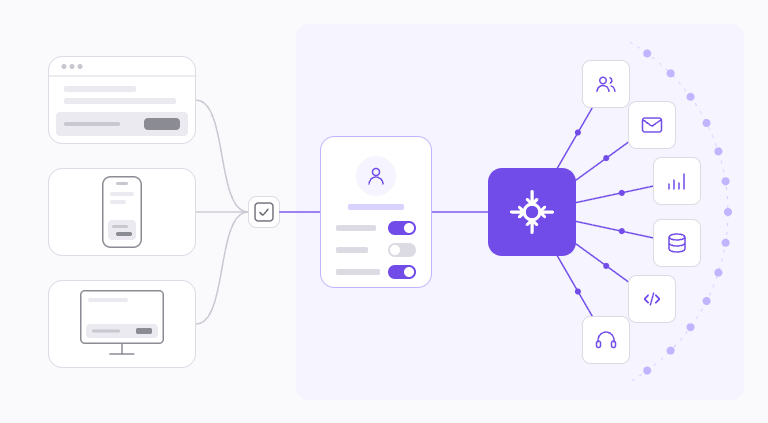
Usercentrics and Cookiebot start at the banner and work outward. Syrenis starts with the customer record. Every consent and preference, from a cookie choice to a newsletter topic to a call-center opt-out, is stored against the person and read by every system that uses their data.

Enterprise preference management

Most preference tools collect choices in a widget and export them. Syrenis runs preferences as a governed program: unlimited channels and preference types, choices broken down by topic, brand and business unit, and preference centers that can be hosted or embedded, branded per business and multilingual.

Identity resolution across devices and systems

Browser-level consent resets when the browser does. Syrenis ties choices to known identities through identity consent and carries them between devices with follow-me consent, so a customer who opts out on a phone isn’t asked again, or tracked, on a laptop.

Why teams look for Usercentrics alternatives

Why teams look for alternatives to Usercentrics

Usercentrics is good at what it’s designed for, and most teams that move aren’t unhappy with their banner. They’ve hit something a banner doesn’t handle:

  • Preferences need to drive CRM, email and service systems, not just the tags on a website
  • Consent has to follow a signed-in customer across devices, not stay with one browser
  • Several brands and regions need one consent and preference program instead of a stack of separate accounts
  • Pricing built around sessions or subpages doesn’t fit a program measured in customer records
  • Privacy teams want data subject requests and audit trails in the same platform as consent
Competitors

Usercentrics competitors

Who competes with Usercentrics depends on which part of it you’re replacing.

Cookiebot vs Usercentrics

They’re the same company. Cybot, which made Cookiebot, merged with Usercentrics, and both platforms now sit under the Usercentrics name. Cookiebot is the self-serve option for websites, with a free plan up to 50 subpages on one domain and paid plans that scale by subpage count. Usercentrics CMP covers web, app and connected TV, with plans by domains and sessions and a Corporate tier for sites above 1 million sessions a month.

Switching

Why teams switch from Usercentrics to Syrenis

Teams switch when consent stops being a website compliance task and becomes customer data the whole business depends on.

Preference depth across channels and brands

A group with a dozen brands can run one preference program with Syrenis, not a dozen. Customers choose exactly what they hear about, through which channel and from which brand, and every system reads the same answer.

Built for regulated, multi-brand estates

The Syrenis platform is cloud-native and API-first, so consent moves between your apps, platforms and legacy systems without a nightly batch in the middle. You control where consent data is stored and processed and apply policies by jurisdiction. Implementation starts with a design phase that agrees the solution before anything is configured, then runs as five parallel workstreams through to live service.

Built for regulated, multi-brand estates
Testimonials

What customers and analysts say

Syrenis is a representative vendor in the April 2026 Gartner® Market Guide for Privacy UX

The capabilities of Syrenis are unmatched: its flexibility, scalability, and granularity are unique. I’m confident that this technology solves both our current challenges and into the next 5 years and beyond. This is an important step forward in managing our complex relationships compliantly.

Head of Technical Privacy and Governance

Retail

Switching from Usercentrics

Syrenis imports existing consent records through APIs and exported consent logs, so customers’ earlier choices carry across without asking them to consent again. Cookiebot already lets you export all consents, with categories, as a CSV file. The design phase then maps your current categories, vendors and preference structure before anything goes live.

Book a demo to see your own consent and preference model running in Syrenis.

Switching from Usercentrics
Support

Frequently asked questions

What are the best Usercentrics alternatives?

The Usercentrics alternatives most often compared are Syrenis, OneTrust, Didomi, TrustArc, Osano and Ketch. Osano is closest on quick, self-serve website consent, OneTrust and TrustArc add broad privacy governance, Didomi is strong in publishing and ad tech, and Syrenis goes deepest on enterprise preference management and identity resolution.

Is Cookiebot the same as Usercentrics?

Yes, Cookiebot is owned by Usercentrics. Its maker, Cybot, merged with Usercentrics, and Cookiebot is now sold as “Cookiebot by Usercentrics” alongside the Usercentrics CMP. Cookiebot is the self-serve website option priced by subpages, while Usercentrics CMP covers web, app and connected TV and is priced by domains and sessions.

What's the difference between Usercentrics and OneTrust?

Usercentrics is a consent-first company, focused on cookie, app and connected TV consent, server-side tracking and preference collection. OneTrust sells a wide governance platform spanning privacy, risk and AI governance, where consent is one module of many. Teams that need consent and preferences to drive CRM, service and marketing systems often add a specialist like Syrenis to that shortlist.

How much does Usercentrics cost?

Usercentrics publishes its web CMP plans, priced by number of domains and sessions, with a free plan for one domain under 1,000 monthly sessions and a 14-day free trial. Sites above 1 million sessions a month move to a Corporate plan by quote. Cookiebot starts at €7 a month and scales with the number of subpages. Syrenis is priced by bespoke quote, based on the number of consent records, the products you need and the number of domains.

Does Usercentrics offer preference management?

Yes. Usercentrics Preference Manager provides a preference center portal and widgets, a unified view of consent and preferences, and connectors that pass choices to ad and martech tools. Syrenis goes further on the operational side, with identity-linked records, a customer service portal for agents and real-time sync across 350+ integrations.

Can Syrenis replace the Usercentrics or Cookiebot banner?

Yes. Syrenis covers cookie consent with site scanning, IAB TCF 2.3, Google Consent Mode v2 and Global Privacy Control, then adds preference centers, identity resolution and real-time sync. If you rely on Usercentrics for connected TV consent, check those environments with the Syrenis team first.

How does Syrenis keep consent consistent across devices?

Syrenis links consent to known identities rather than browser sessions, so when a customer signs in, their earlier choices apply on the new device. Follow-me consent carries the record across devices and cross-domain consent keeps it consistent across your brands and websites.